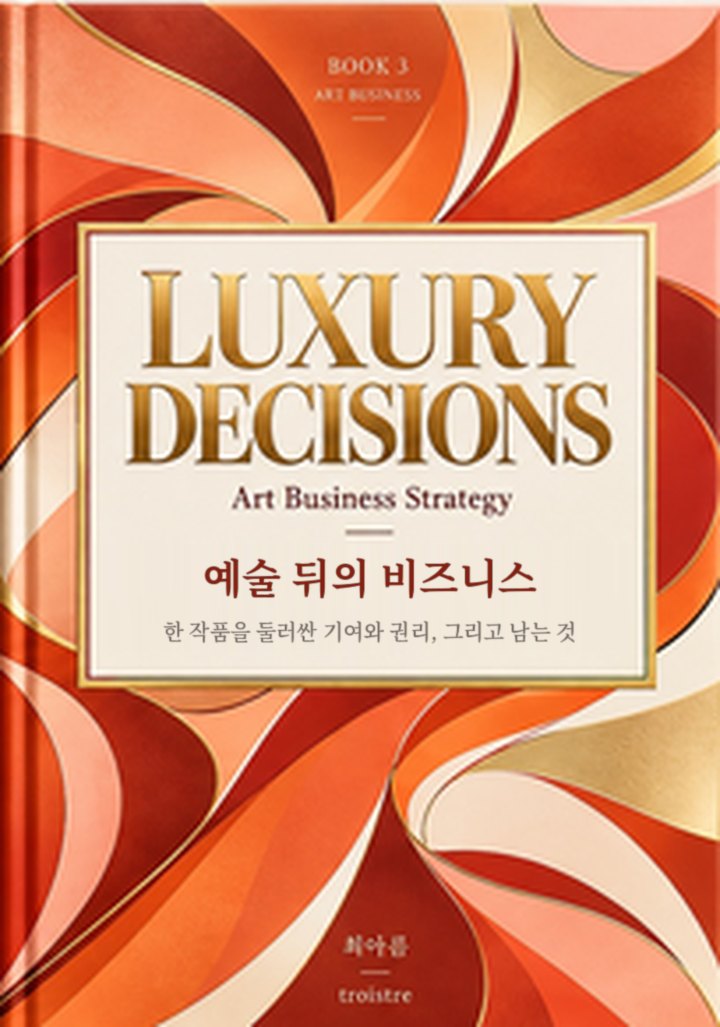
Decisions in the art business are not settled by the quality of the work alone. Who contributes what, who gains what, and what remains with whom once the project is over all have to be weighed. What we need to find, then, is not an answer to imitate but the conditions that made a decision right where it was made. This book traces those conditions through 15 scenes, and the decision-maker changes from chapter to chapter: an artist, a gallery, a museum, a foundation, or a company.
Among them are a work by Lee Bul withdrawn just before the opening of a 1997 two-person show at the Museum of Modern Art, which still left the museum’s name on her record; a sculpture estimated at over $70 million that drew no bids at Sotheby’s in 2025, offered without the guarantee that several other works carried that evening; the Joan Mitchell Foundation’s repeated refusals to let Louis Vuitton use the artist’s paintings in advertising; and the Robert Rauschenberg Foundation’s archive, where a 1969 purchase order, read with other papers, answered a question half a century later.
Each chapter borrows concepts from strategy research that examined the same kind of question first, such as status and complementary assets, risk sharing and knowledge integration, resource dependence and licensing, and organizational memory. These concepts have been used to understand relationships and decisions within and around organizations; applied here to decisions among artists, galleries, museums, foundations, and companies, they become a common language for people who work in different roles. The book does not recast the purposes of artists and institutions as corporate goals. Where a theory does not fit a scene, it says so, and where contracts and transactions are undisclosed, it does not fill the gaps with conjecture.